

Thermostat Installation
Your thermostat decides when your furnace or heat pump runs, how hard it works, and whether costly backup heat comes on at all. Installed and set up correctly, a new one makes your home more comfortable and your bills easier to predict. W3 installs manual, programmable, smart, and communicating thermostats, confirms each one is truly compatible with your equipment, and sets it up before we leave so it works the way you expect.
Thermostat Installation Services
Thermostat Installation in Rowlett, TX and the Dallas Metroplex
A thermostat in North Texas earns its keep. Spring and fall regularly bring a chilly morning and a warm afternoon on the same day, so the system may switch from heating to cooling and back within hours, and a winter front can take a pleasant afternoon below freezing by midnight. A thermostat that is badly placed, wired for the wrong equipment, or simply hard to use turns those swings into uneven rooms and wasted energy.
W3 Electric Heating & A/C installs thermostats for homes in Rowlett, Rockwall, McKinney, Garland, Wylie, Forney, and throughout the Dallas area. The job sits right on the line between our two trades: the thermostat controls your HVAC system, but installing it is low-voltage wiring work, from adding a common wire to finding out why a control board keeps blowing its fuse. Being licensed for both HVAC and electrical work means one technician handles all of it.
What Is Thermostat Installation?
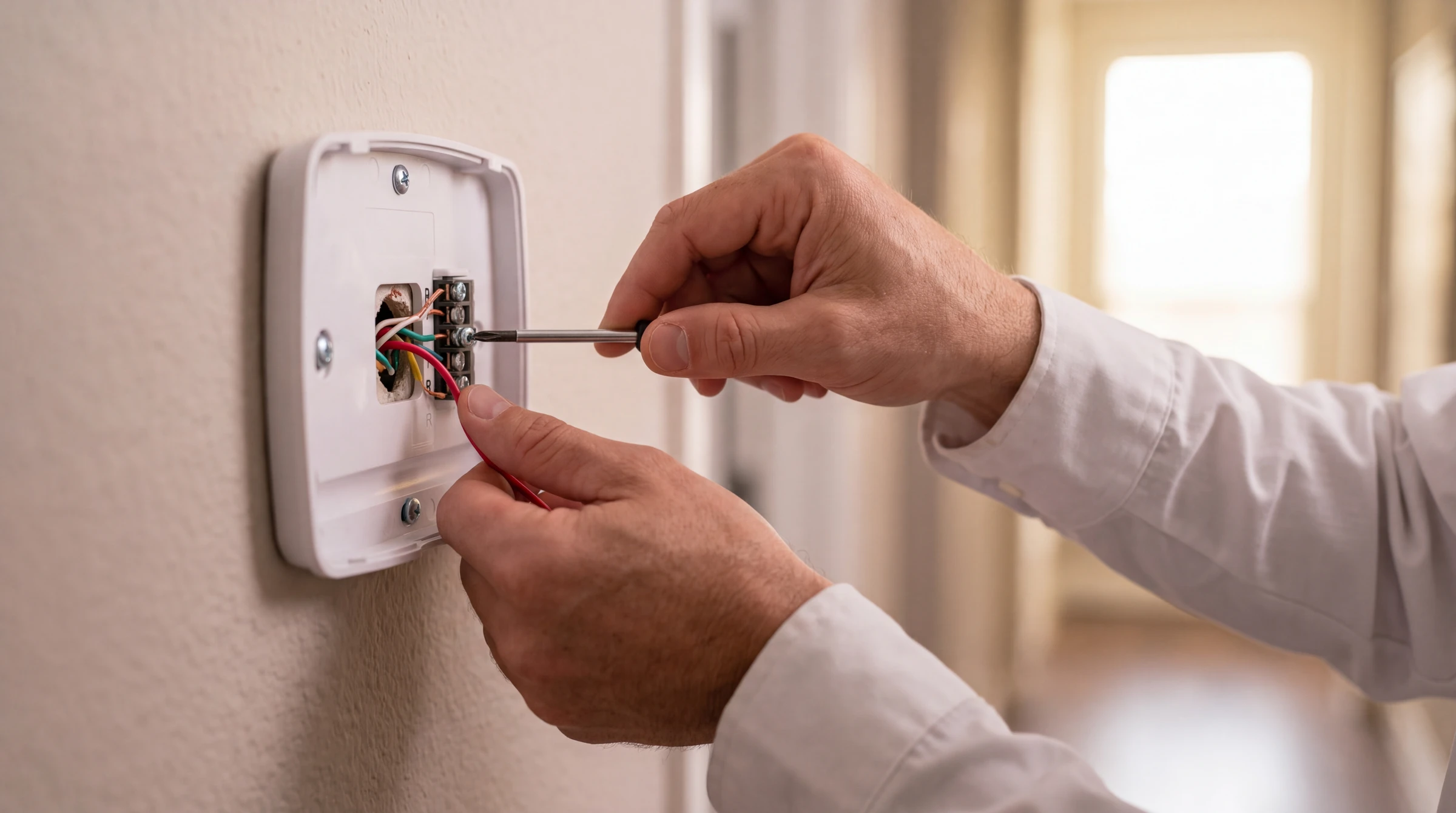
Thermostat installation means replacing or upgrading the control on your existing heating and cooling system. We remove the old thermostat, check what wiring is actually in the wall and at the equipment, add or correct wires where needed, and mount the new one with the old mounting holes patched. Then we configure it for your specific system, set up your schedule and Wi-Fi connection, and show you how to use it, including the settings most people never find.
If you are replacing your furnace or heat pump, the thermostat is usually chosen and installed as part of that project so it matches the new equipment from the start. Our furnace installation and heat pump installation pages cover that process. This page is for the many homes where the equipment is staying and the thermostat is what needs to change.
Choosing the Right Type of Thermostat
There is no single best thermostat. The right one depends on your equipment, how regular your routine is, and how much you want to control from your phone. These are the main types we install.
Manual and Programmable Thermostats
A manual thermostat holds whatever temperature you set until you change it. It is simple and dependable, and for a household that is home most of the day it may be all you need. A programmable thermostat adds a schedule, easing off the heat while you sleep or are at work and bringing it back before you wake up or get home. The savings depend entirely on that schedule actually being used, so we build it with you rather than leaving the factory program in place.
Smart and Wi-Fi Thermostats
A Wi-Fi thermostat lets you change the temperature from your phone, see how long the system ran, and get alerts when something looks wrong. Many smart models go further, learning your routine, using your phone location to tell when the house is empty, or pulling the outdoor temperature from the internet. They suit busy households, but they depend on steady power, which is where many do-it-yourself installs go wrong.
Communicating Thermostats
Some higher-end furnaces, heat pumps, and air handlers use a communicating control that exchanges data with the equipment rather than simply switching it on and off. These thermostats fine-tune variable-speed blowers and compressors, display fault codes, and unlock features a standard thermostat cannot reach. The catch is that they generally work only with matching equipment from the same manufacturer line. Swapping one for a generic smart model can disable features you paid for or stop the system working properly, so we confirm what you have before recommending anything.
Compatibility: Where Thermostat Installs Go Wrong
Steady Power and the C-Wire
Smart thermostats need constant power to run their screens and stay on Wi-Fi. That power comes from the common wire, usually called the C-wire, which many older systems do not have connected. Some thermostats try to manage without it by borrowing power through the heating or cooling circuit, which can make the equipment chatter on and off, the thermostat restart, or the Wi-Fi drop. We look for a spare conductor in the existing cable first, and if there is none, run new thermostat wire or fit an adapter at the equipment, whichever suits your home.
Heat Pump Wiring and Backup Heat
Heat pumps add settings a furnace never needs. The thermostat controls the reversing valve through the O/B terminal, and depending on the equipment that valve is powered in either cooling or heating, so one wrong setting leaves you with a system that cools when you ask for heat. The thermostat also manages auxiliary heat, the backup strips that help on the coldest days, and emergency heat, which runs those strips alone. Configured properly, many thermostats can also lock the strips out above a chosen outdoor temperature so they stay off on mild mornings.
Dual Fuel, Multi-Stage, and Variable-Speed Equipment
Dual fuel means a heat pump and a gas furnace sharing one system, with the thermostat or its controls choosing which one runs based on the outdoor temperature. Multi-stage equipment has a lower output for mild days and a higher one for cold ones, and it needs a thermostat with matching stages and wiring, or it may run at one level all the time. Variable-speed equipment often needs a communicating thermostat to adjust its output in small steps. In each case, a thermostat that merely turns the system on can leave much of what you paid for unused.
Is It the Thermostat or the System?
Quick Checks That Point to the Thermostat
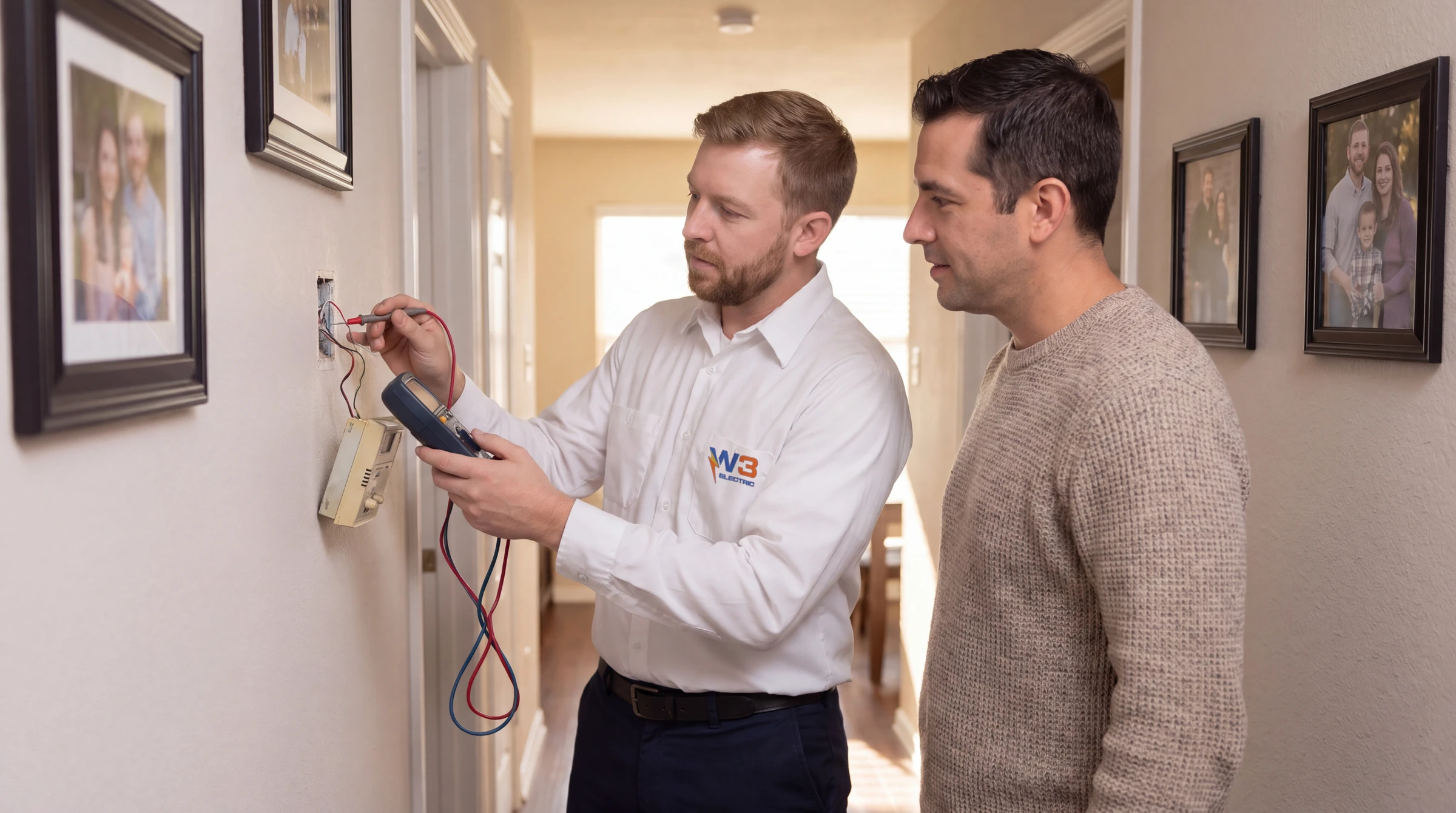
Some no-heat calls turn out to be the thermostat rather than the furnace or heat pump. These checks are safe for anyone and often show which one is at fault:
- A blank screen usually means dead batteries or, on a hardwired model, a tripped breaker or a switch turned off at the furnace or air handler, since many thermostats draw their power from the equipment
- Confirm the mode is set to heat, the setpoint is above the room temperature, and no schedule or hold is overriding you
- Compare the reading with a separate thermometer in the same room, since a gap of several degrees points to the thermostat or where it sits
- If heat mode produces cool air right after a thermostat change on a heat pump, the reversing valve setting is usually backward
- A Wi-Fi thermostat that keeps restarting or dropping offline is usually short on power
- Heat pump air that feels warm rather than hot can be normal, because it runs cooler than furnace air even when everything works
If the thermostat has power, is set correctly, and is calling for heat but nothing happens, the problem is most likely in the equipment, and that calls for a heating repair visit instead.
Why Heat Pump Thermostats Need a Professional Install
A furnace thermostat wired incorrectly usually just does not work, which is at least obvious. A heat pump thermostat set up incorrectly often seems fine: the house stays warm, but the backup strips are doing the work instead of the heat pump, and the first sign is a much higher electric bill. We match the O/B setting to the equipment, put the auxiliary and emergency heat stages on the right terminals, set the outdoor lockouts and compressor delay, then run the system in heating, cooling, and backup modes to prove each one works.
Where Your Thermostat Should Go
A thermostat belongs on an interior wall, around eye level, in a room you actually use. Keep it off exterior walls, out of direct sun, and away from lamps, televisions, and the kitchen, which all make it think the house is warmer than it is. Avoid spots under a ceiling supply register, which blows conditioned air straight at it, and hallways nobody uses. We also seal the hole where the wires enter the wall, because air from inside the wall can skew the reading, and if your current spot is the problem, we can talk through moving it.
Choose W3 for Your Thermostat Installation
A thermostat is a small part with a big job, and the difference between a good install and a frustrating one is usually in details nobody sees. W3 Electric Heating & A/C has been family run since a husband and wife founded it in 2019, and our technicians give advice rather than sales pitches. If the thermostat you already own is fine and only needs a setting changed, that is what we will tell you.
Expect a uniformed technician, covered floors, a compatibility check before anything comes off the wall, and a price up front, before anything is installed. If the job turns up a missing C-wire or a damaged cable, it simply becomes part of the work rather than a reason to call someone else.
For more information on our services or to schedule an appointment, contact us online or give us a call today at (972) 793-0733. The right thermostat, set up properly, keeps your home comfortable through every North Texas season.
Our Awards &
Partnerships








Check Out Our
5-Star Reviews
“All of the staff was very friendly and professional. I work in real estate and deal with a lot of trade professionals.”

- Paul G.
“GREAT AS GREAT A GREAT CAN BE”
- Heather C.
“All of the staff was very friendly and professional. I work in real estate and deal with a lot of trade professionals.”
- Dan S.
“Customer service is amazing. Jose has a outgoing personality, is very knowledgeable and great to work with.”
- Janet T.
“My technician, Jordan, was knowledgeable about required services and W3's packages to better aid me in making informed decisions about our house/what to prioritize.”
- Hannah R.
“He did an excellent job and exceeded my expectations. Thank you so much Cody!”
- Thelma M.
“SO friendly and responsive. Just a great experience.”
- Kay C.
“All of the staff was very friendly and professional. I work in real estate and deal with a lot of trade professionals.”
- Robert K.

Safety
Our neighbor's deserve to be safe and we will make it our mission to ensure their safety.

Honesty
We are not salesmen; we are trusted consultants here to guide our neighbors to optimal safety.

Community
Our community, which is comprised of our cherished customers, dedicated employees, and all the wonderful people we engage with daily, is at the heart of everything we do. We are not just a business but a part of your community, and we strive to make it a better place through our services.